

The H-2B visa processing time in 2026 is one of the most important planning factors for any employer considering the program. Unlike a domestic hire, H-2B does not happen quickly. The process runs through the Department of Labor, U.S. Citizenship and Immigration Services, and the State Department, each with their own review periods, queues, and deadlines. Employers who understand the full timeline before they start are consistently better prepared, better staffed, and better positioned to handle the unexpected.
This guide breaks the H-2B certification timeline into its major stages, explains what happens at each step and roughly how long each one takes, and identifies the points in the process where employer action is most critical. It is a planning resource, not legal advice. For case-specific guidance, always work with a licensed immigration attorney and an experienced H-2B support provider.
To learn more about program eligibility, associated costs, and general seasonal staffing strategies, refer to our 2026 Guide to H-2B and International Staffing Programs.
How Long Does H-2B Visa Processing Time Take in 2026?
The H-2B timeline moves through five major stages from start to finish: prevailing wage determination, labor market test and DOL certification, USCIS petition, consular processing and embassy interview, and worker entry. Each stage has its own timeline, and delays in one phase affect everything that follows.
Employers who begin the process with 6 to 9 months of runway before their seasonal need typically have the most flexibility. Those who start 4 months out or later often find themselves under time pressure at each stage and with limited options if delays occur.
Stage 1: Prevailing Wage Determination (4 to 6 Weeks)
The process begins with a prevailing wage request submitted to the DOL’s National Prevailing Wage Center (NPWC). The NPWC issues a wage determination that establishes the minimum rate the employer must pay H-2B workers in the relevant occupation and geographic area.
This step is often underestimated. DOL processing for prevailing wage determinations can take 4 to 6 weeks or longer during peak periods. Without a valid prevailing wage determination, the employer cannot proceed to the labor certification stage. Filing promptly, and accounting for possible delays, is important from day one.
Stage 2: Recruitment and Labor Market Test (3 to 4 Weeks)
Before certifying that an employer’s need cannot be met by the domestic workforce, DOL requires employers to conduct a documented labor market test. This involves posting the job opening in specific locations, following prescribed recruitment steps, and retaining documentation of all applicant contact and outcomes.
The recruitment period must run for a defined window before the employer can close the process and report results to DOL. Employers must be prepared to hire any qualified U.S. worker who applies during this period. The documentation requirements here are specific, and errors or omissions in the recruitment record are one of the more common causes of certification delays.
Stage 3: DOL Temporary Labor Certification (30 to 90 Days)
After completing the recruitment period, the employer submits an Application for Temporary Employment Certification to DOL. DOL reviews the application, the recruitment record, and the prevailing wage compliance, then issues a certified or denied determination.
The H-2B certification timeline at DOL varies. Standard processing has historically ranged from 30 to 90 days, though backlogs and application volume affect actual times. Employers can request a specific date of need in their filing, and DOL takes that date into account in its processing queue.
DOL certification is a prerequisite for the next stage. Without it, the USCIS petition cannot be filed.
Stage 4: USCIS I-129 Petition (2 to 4 Months Standard; 15 Business Days with Premium Processing)
With the DOL certification in hand, the employer files the I-129 petition with USCIS to formally request H-2B classification for the named workers. USCIS reviews the petition, the supporting documentation, and the DOL certification before issuing an approval or request for additional evidence.
Standard I-129 H-2B processing time at USCIS has historically ranged from 2 to 4 months, though this varies by service center and filing volume. Employers with tighter timelines have the option to request premium processing for an additional fee, which commits USCIS to a 15 business day review window.
Current USCIS processing times by form and service center are posted at the USCIS processing times page and are updated regularly. Always check current times when planning your budget for premium processing.
Once the I-129 is approved, USCIS notifies the employer and, in most cases, the relevant U.S. Embassy or Consulate where the workers will be interviewed.
Stage 5: Consular Processing and Embassy Interview (2 to 6 Weeks)
After USCIS approval, each named worker must apply for and receive an H-2B visa stamp at a U.S. Embassy or Consulate in their home country. The visa application process includes completing Form DS-160, paying the visa application fee, scheduling an appointment, and attending the in-person consular interview.
The H-2B embassy interview timeline depends heavily on appointment availability at the specific embassy. Some locations have short wait times; others, particularly in high-demand countries, may have appointment backlogs of several weeks. Employers and their support providers need to monitor embassy appointment availability for the countries their workers are sourced from and plan accordingly.
Barring complications at the interview, visa issuance typically follows within a few business days of the appointment. Workers can then begin booking travel to arrive within the entry window specified on their visa.
Stage 6: Worker Arrival and Onboarding
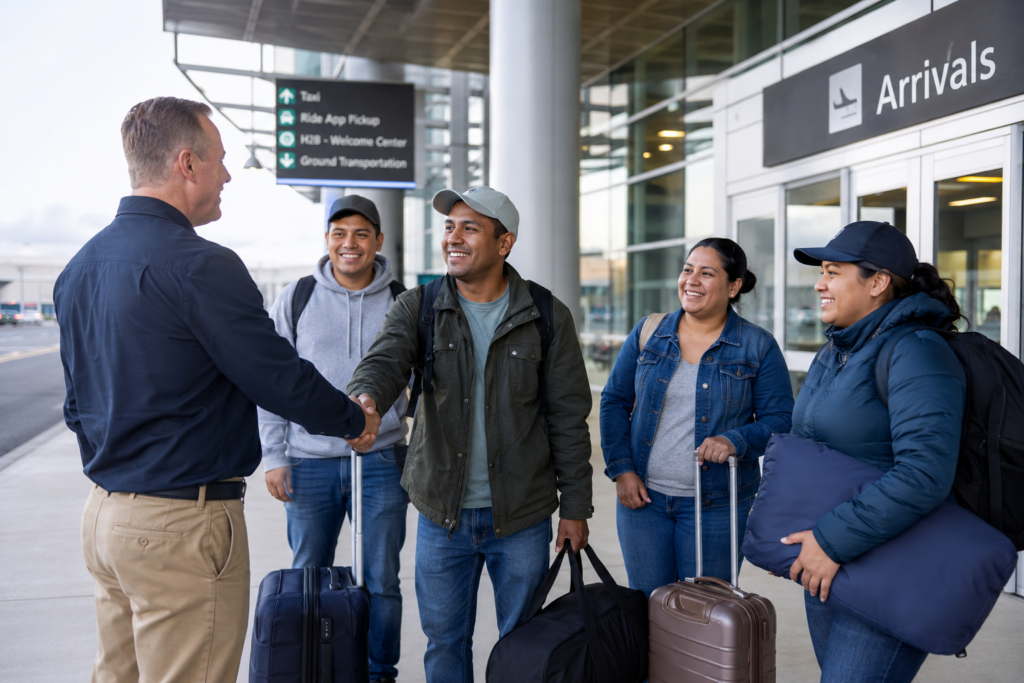
Once workers have their visas, they enter the U.S. through a port of entry. The employer is responsible for coordinating arrival logistics, providing the required notice of worker rights, and completing any required onboarding documentation in compliance with H-2B program rules.
Transportation costs from the workers’ home country to the U.S. worksite are the employer’s responsibility under federal regulations. Employers should have arrival logistics, housing access, and first-day orientation materials ready before workers land.

Full Timeline Summary
Adding up each stage, the full H-2B timeline from prevailing wage request to worker arrival typically runs:
- Prevailing wage determination: 4 to 6 weeks
- Recruitment and labor market test: 3 to 4 weeks
- DOL temporary labor certification: 30 to 90 days
- USCIS I-129 petition: 2 to 4 months standard; 15 business days with premium processing
- Consular processing and embassy interview: 2 to 6 weeks
- Total: 5 to 9 months from start to worker arrival, depending on processing times and premium processing decisions
Employers who begin the process 6 to 9 months before their seasonal start date build in the buffer needed to handle delays at any stage without compromising their seasonal operations.
Common Questions About H-2b Visa Processing Time in 2026
Can the H-2B timeline be shortened? Premium processing at USCIS is the most reliable way to accelerate one phase of the timeline, but it only applies to the I-129 petition stage. DOL certification, embassy scheduling, and prevailing wage processing cannot be expedited through premium processing. The best strategy for a shorter total timeline is starting the process as early as possible.
What happens if my seasonal need date passes before USCIS approves the petition? Employers can request a specific date of need in their DOL certification and I-129 filing. If the date passes, the petition may still be approved, but the practical value of the workers’ start date is affected. This is one reason early filing matters significantly in H-2B planning.
Are H-2B workers tied to one employer? Yes. H-2B status is tied to a specific employer and a specific job. Workers cannot transfer to a different employer during their authorized period unless the new employer files a separate petition. This is a fundamental feature of the program structure.
What if a worker cannot attend their scheduled embassy interview? Rescheduling embassy appointments depends on availability at the specific consulate. In some locations, rescheduled appointments are available within days; in others, the wait is much longer. Employers and support providers should monitor each worker’s appointment status and address scheduling issues early.
Build the Timeline Before You Need the Workers
Success in the 2026 H-2B cycle depends on proactive planning, as the process involves numerous interconnected stages. Delays at any point, whether during DOL certification or due to embassy backlogs, can disrupt the entire schedule, meaning a June start date often necessitates planning that begins late in the previous year.
Partnering with a seasoned H-2B support team provides employers with expert guidance through every phase, leveraging extensive experience across various countries and seasons. For specific information regarding financial requirements, refer to the H-2B Visa Cost Breakdown: Worker vs. Employer Expenses.
Understand the H-2B timeline more clearly and connect with United Work & Travel to plan ahead with confidence.